


Content Table
- Messenger Encryption Explained: How E2EE Protects Your Messages in 2026
- End-to-End Encryption Standards: Key Security Protocols for Secure Messaging Apps
- Secure Messenger Comparison 2026: Privacy Features, Encryption & Bot API Support
- Best Encrypted Messengers 2026: Top Privacy-Focused Chat Apps Ranked
- SecretNote vs Messenger Apps: Self-Destructing Messages for Maximum Privacy
- Secure Messaging FAQ: Common Questions About Encrypted Chat Apps
Messenger Encryption Explained: How E2EE Protects Your Messages in 2026
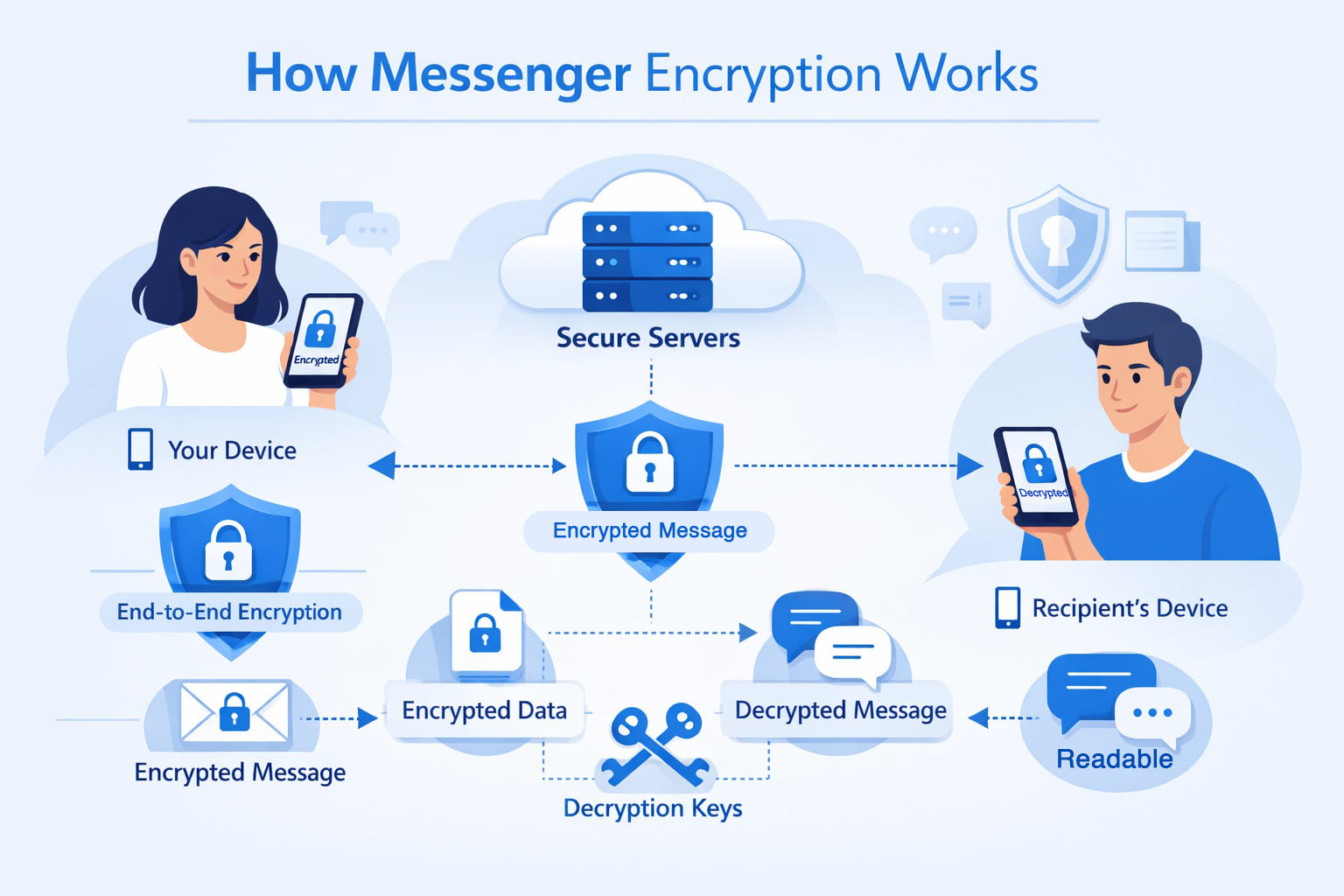
End-to-end encryption (E2EE) remains the gold standard for protecting private messages in transit. When you send a message through an E2EE-enabled instant messenger, your content gets encrypted on your device and only decrypts on the recipient's device. No intermediary, including the platform itself, can read your conversations.
However, encryption alone does not guarantee complete privacy for your private messages. Metadata (who you message, when, and how often) often remains visible to platforms. For deeper understanding of encryption algorithms like AES and RSA, check out our Advanced Encryption Guide.
End-to-End Encryption Standards: Key Security Protocols for Secure Messaging Apps
The best messengers implement robust encryption protocols that have been independently audited. When evaluating secure messaging apps, understanding these technical foundations helps you make informed choices about which platforms truly protect your communications.
Key encryption considerations for 2026 include:
- Post-quantum readiness: Some instant messenger platforms now implement hybrid encryption to resist future quantum attacks
- Forward secrecy: Session keys rotate regularly, limiting damage if one key is compromised
- Metadata protection: Only a few platforms actively minimize metadata collection for private messages
Secure Messenger Comparison 2026: Privacy Features, Encryption & Bot API Support
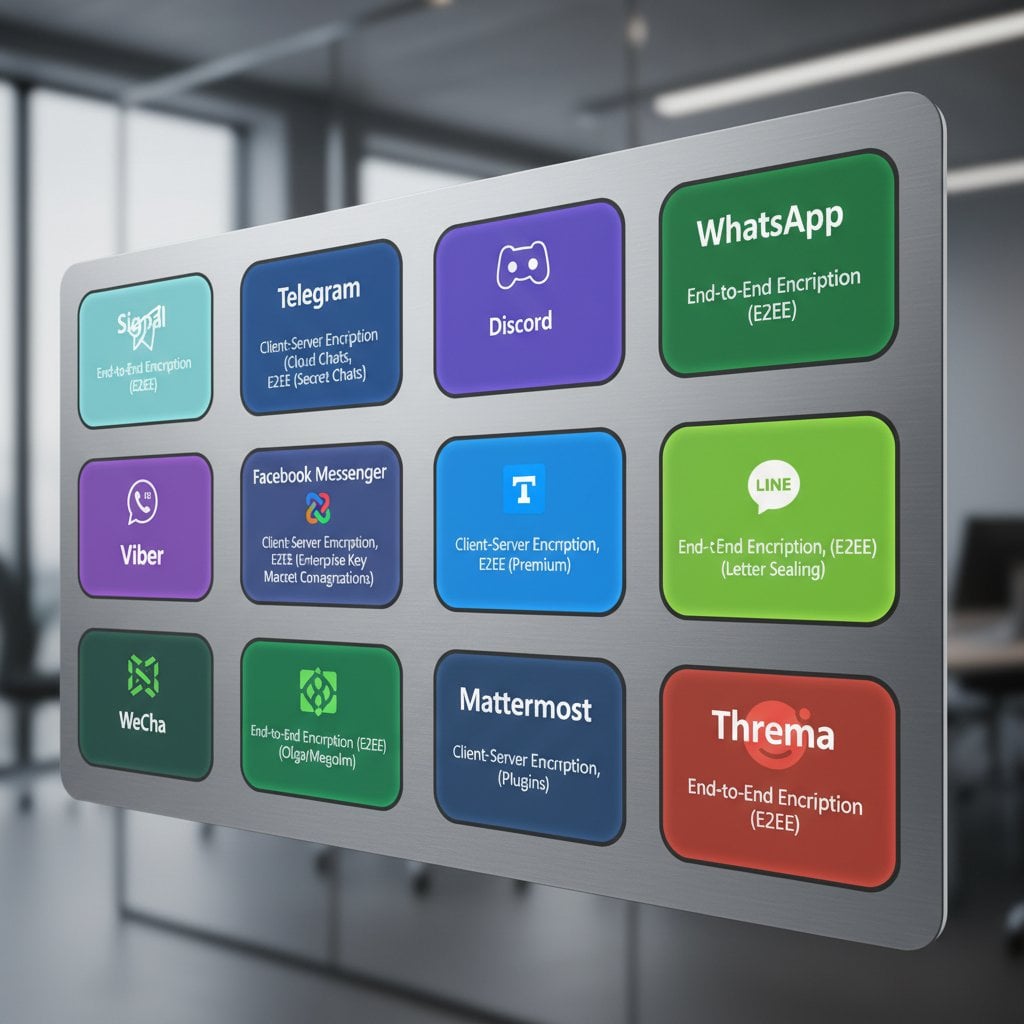
Not all instant messenger platforms offer equal protection or bot capabilities. When searching for the best messengers that balance security with functionality, understanding each platform's strengths becomes essential. Whether you need a chat app for personal use or business communication, the comparison below will help you decide. Below is a technical comparison of major platforms in 2026:
Best Encrypted Messengers 2026: Top Privacy-Focused Chat Apps Ranked

Signal
- Encryption: Full E2EE by default using the Signal Protocol
- Metadata: Minimal collection, sealed sender feature hides sender identity
- Bot support: Limited, no official bot API
- Best for: Maximum privacy, personal private messages

Telegram
- Encryption: E2EE only in "Secret Chats," standard chats use server-side encryption
- Metadata: Moderate collection, stores message data on servers
- Bot support: Robust Bot API with extensive features Check out our Guide on how to Setup a Bot for Telegram
- Best for: Bot development, communities, channels

- Encryption: Full E2EE using Signal Protocol for all private messages
- Metadata: Significant collection shared with Meta
- Bot support: WhatsApp Business API with approval process Check out our Guide on how to Setup a Bot for Whatsapp
- Best for: Business communication, customer support bots

Session
- Encryption: Full E2EE by default using the Session Protocol, no phone number or email required
- Metadata: Minimal collection, decentralized network architecture reduces metadata exposure
- Bot support: Limited, community-driven integrations
- Best for: Anonymous communication, maximum metadata protection

Briar
- Encryption: Full E2EE with peer-to-peer architecture, works over Tor, Wi-Fi, or Bluetooth
- Metadata: Minimal collection, no central servers to store metadata
- Bot support: None, designed for direct peer communication
- Best for: High-risk environments, offline communication, journalists and activists

Wire
- Encryption: Full E2EE by default using Proteus protocol (based on Signal Protocol)
- Metadata: Moderate collection, stores some user metadata on servers
- Bot support: Wire Bot API available for enterprise integrations
- Best for: Enterprise collaboration, European compliance requirements

Element
- Encryption: Full E2EE by default using Megolm and Olm protocols
- Metadata: Minimal collection, decentralized architecture reduces single-point data aggregation
- Bot support: Open Matrix Bot SDK with bridges to other platforms
- Best for: Privacy-focused organizations, self-hosted deployments, cross-platform bridging

Wickr
- Encryption: Full E2EE by default with perfect forward secrecy and message expiration
- Metadata: Minimal collection, designed for ephemeral communication
- Bot support: Wickr Enterprise API for business integrations
- Best for: Enterprise security, government and defense communications

SimpleX
- Encryption: Full E2EE with no user identifiers, uses temporary anonymous pairwise identifiers
- Metadata: Minimal collection, no user IDs means no social graph can be constructed
- Bot support: Limited, SimpleX Chat Bot API available
- Best for: Maximum anonymity, users who want no persistent identity

Proton Messenger
- Encryption: Full E2EE integrated with Proton ecosystem, zero-access encryption
- Metadata: Minimal collection, Swiss privacy laws and infrastructure
- Bot support: Limited, focused on privacy over extensibility
- Best for: Proton ecosystem users, privacy-conscious professionals
Community and Collaboration Platforms

Discord
- Encryption: TLS in transit only, no E2EE for private messages
- Metadata: Extensive collection for moderation
- Bot support: Powerful API with rich interaction features Check out our Guide on how to Setup a Bot for Discord
- Best for: Community servers, gaming, collaborative spaces

Slack
- Encryption: TLS in transit and at rest, no E2EE for private messages
- Metadata: Extensive collection for workspace analytics and compliance
- Bot support: Comprehensive Slack API with workflow automation and app integrations Check out our Guide on how to Setup a Bot for Slack
- Best for: Enterprise team communication, workplace productivity bots

Microsoft Teams
- Encryption: TLS in transit, E2EE available for one-on-one calls, limited E2EE for chats
- Metadata: Significant collection integrated with Microsoft 365 ecosystem
- Bot support: Microsoft Bot Framework with Azure integration and adaptive cards Check out our Guide on how to Setup a Bot for Microsoft Teams
- Best for: Enterprise environments, Microsoft ecosystem integration, meeting bots
Consumer and Social Messaging Platforms

Facebook Messenger
- Encryption: E2EE available in encrypted chats, not default for all conversations
- Metadata: Extensive collection shared across Meta platforms
- Bot support: Messenger Platform API with templates, quick replies, and commerce features Check out our Guide on how to Setup a Bot for Facebook Messenger
- Best for: Consumer engagement, e-commerce bots, social media integration

Viber
- Encryption: Full E2EE by default for private messages and group chats
- Metadata: Moderate collection, stores contact information
- Bot support: Viber Chatbot API with rich messaging and keyboard features
- Best for: International messaging, business chatbots in emerging markets
Regional and Specialized Messengers

LINE
- Encryption: Letter Sealing E2EE for private messages when enabled
- Metadata: Moderate to significant collection for service improvement
- Bot support: LINE Messaging API with rich menus, flex messages, and LIFF apps
- Best for: Asian markets, retail and service industry bots, loyalty programs

- Encryption: TLS in transit, no E2EE, server-side access to private messages
- Metadata: Extensive collection with regulatory compliance requirements
- Bot support: WeChat Official Account API with mini-programs and payment integration
- Best for: Chinese market, super-app functionality, integrated commerce bots
Privacy-First and Open Source Solutions

Matrix (Element)
- Encryption: Full E2EE by default using Megolm and Olm protocols
- Metadata: Minimal collection, decentralized architecture reduces single-point data aggregation
- Bot support: Open Matrix Bot SDK with bridges to other platforms Check out our Guide on how to Setup a Bot for Matrix
- Best for: Privacy-focused organizations, self-hosted deployments, cross-platform bridging

Threema
- Encryption: Full E2EE by default, no phone number required
- Metadata: Minimal collection, anonymous usage possible
- Bot support: Threema Gateway API for business messaging and bots
- Best for: High-security environments, anonymous communication, European compliance

Mattermost
- Encryption: TLS in transit, E2EE available with plugins, self-hosted control
- Metadata: Full control when self-hosted, configurable retention policies
- Bot support: Comprehensive bot and integration framework with webhooks and slash commands Check out our Guide on how to Setup a Bot for Mattermost
- Best for: Self-hosted enterprise deployments, DevOps integrations, regulated industries
Privacy Note: When handling sensitive information through any instant messenger or chat app, consider using one-time secret links that self-destruct after viewing. This adds an extra layer of protection regardless of platform encryption.
SecretNote vs Messenger Apps: Self-Destructing Messages for Maximum Privacy
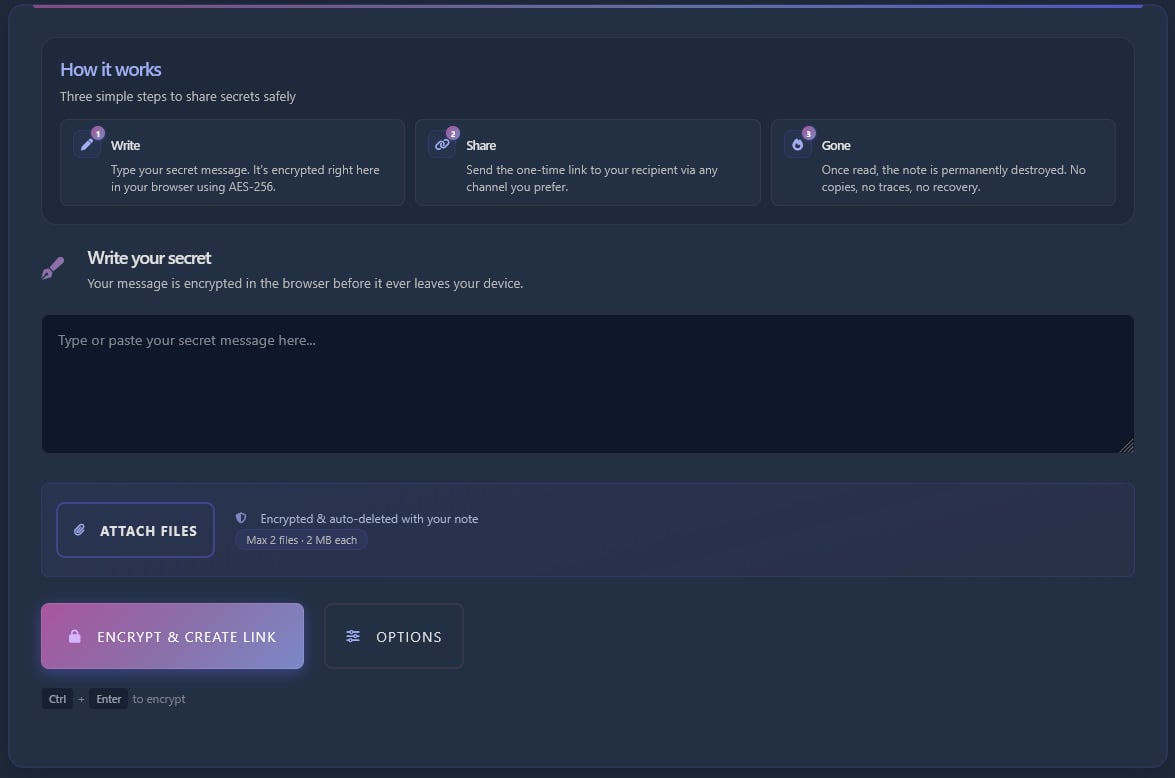
While traditional instant messenger platforms require account creation, app installation, and ongoing trust in their infrastructure, SecretNote offers a fundamentally different approach to sharing sensitive information. For users seeking the best messengers alternative for one-time secure communications, SecretNote fills a crucial gap.
How SecretNote Differs from Traditional Messengers
Unlike the platforms listed above, SecretNote focuses on one thing: secure, one-time message delivery. Here is why this matters:
- No accounts required: Neither sender nor recipient needs to create an account, eliminating stored credentials and profile data that other platforms collect
- Zero message persistence: Messages automatically self-destruct after being read once, leaving no trace on servers or devices
- Platform agnostic: Share secret links through any messenger, email, or communication channel without depending on the recipient having specific apps installed
- No metadata accumulation: Without user accounts, there is no message history, contact lists, or behavioral patterns to collect or breach
Key Benefits Over Messenger Platforms
| Feature | Traditional Messengers | SecretNote |
|---|---|---|
| Account required | Yes | No |
| Message storage | Persistent (days to indefinite) | Single-view, then deleted |
| Metadata collection | Moderate to extensive | Minimal |
| Recipient app needed | Yes (same platform) | No (browser only) |
| Message forwarding risk | High | Eliminated after first view |
Ideal Use Cases for SecretNote
SecretNote excels in scenarios where traditional messengers fall short:
- Sharing passwords and credentials: Send login details that disappear after the recipient views them
- One-time sensitive information: API keys, access codes, or confidential instructions that should not persist
- Cross-platform communication: Share secrets with anyone regardless of which messenger they use
- Compliance-sensitive sharing: Reduce data retention liability by ensuring sensitive content does not remain stored
For situations requiring ongoing conversation, traditional encrypted messengers remain valuable. But when you need to share something once and ensure it leaves no trace, SecretNote provides a cleaner, more secure solution than any messenger platform can offer. Learn more about protecting your digital communications in our guide on digital privacy best practices.
If you want an overview of everything published on secure communication here, a search for site:secretnote.eu in Google lists all indexed guides on encryption, privacy and messaging security.
Secure Messaging FAQ: Common Questions About Encrypted Chat Apps
Signal is often viewed as one of the safest messaging platforms available in 2026. It relies on robust end-to-end encryption to protect conversations and gathers very little user information. Privacy advocates recommend it, and its simple design makes it accessible for everyday use.
Threema provides especially strong metadata privacy by using anonymous user IDs and keeping information stored locally on the device. It doesn't require phone numbers or email addresses and avoids relying on cloud storage.
Session stands out for anonymous messaging because it doesn't ask for personal information and sends messages through a decentralized network. This setup helps make conversations much harder to monitor or trace back to users.
Briar can operate without internet access by transmitting messages over Bluetooth and Wi-Fi Direct. This makes it especially helpful during network outages or in places where connectivity is limited or restricted.
SecretNote offers a fundamentally different approach by eliminating accounts, persistent storage, and platform dependencies. Messages self-destruct after a single view, leaving no trace. Unlike messengers that collect metadata over time, SecretNote minimizes data collection entirely. It works best for one-time sensitive shares like passwords or API keys, while traditional messengers suit ongoing conversations.